
CBSE Introduces On-Screen Marking to Modernise Board Exam Evaluation
CBSE Introduces On-Screen Marking to Modernise Board Exam Evaluation
In a major step towards digitisation, the Central Board of Secondary Education (CBSE) is set to introduce the On-Screen Marking (OSM) system for evaluating Class XII board examinations from the 2026 academic session. This reform aims to enhance accuracy, transparency, and efficiency in the evaluation process while maintaining the traditional pen-and-paper format of examinations.
Under this new system, answer sheets will no longer be physically handled by evaluators. Instead, after the exams conclude, all answer scripts will be scanned, uploaded, and made available on a secure digital platform. Teachers will then assess these scripts online, marking a significant transition from manual to digital evaluation.
How the Evaluation Process Will Change
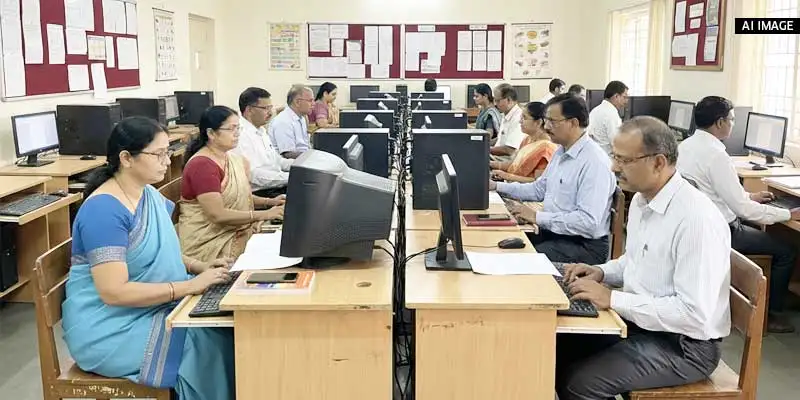
With OSM, evaluators will check answer scripts directly on computer screens rather than working with physical copies. Each teacher will be provided with secure login credentials to access the platform. The marking scheme will be integrated into the system, allowing marks to be awarded question-wise or step-by-step.
One of the key advantages of this system is automated totalling, which eliminates calculation errors. Additionally, the platform includes digital tools such as underlining, ticking, circling, and commenting—closely replicating the traditional method of checking answer sheets.
To ensure accuracy, evaluators will not be able to submit a script unless every question has been assessed. This built-in feature significantly reduces the chances of any answer being overlooked. Importantly, while the mode of evaluation changes, the academic process remains the same—teachers will still read answers and award marks based on established criteria.
Reducing Errors and Improving Efficiency
The introduction of OSM is driven by the need to handle increasing exam volumes more effectively while improving reliability. Automated totalling and system-based checks will greatly reduce common human errors associated with manual evaluation.
The digital system also improves accountability through tracking mechanisms that monitor each stage of the evaluation process. As a result, requests for re-checking and re-totalling are expected to decline, which could help in faster declaration of results.
Another major benefit is the reduction of logistical risks. Since physical answer scripts will no longer need to be transported, issues such as damage, loss, or delays due to weather or handling will be minimised. The shift also supports environmental sustainability by reducing the large-scale movement of paper bundles.
Standardisation and Global Integration
The OSM system aligns closely with existing marking schemes, including detailed sub-marking patterns, ensuring consistency across evaluators. It also opens up opportunities for greater participation from CBSE-affiliated schools worldwide.
With this digital framework, teachers from international CBSE schools across multiple countries will be able to take part in the evaluation process, expanding the pool of evaluators and strengthening global collaboration.
Readiness of Schools and Institutions
Schools across the country have begun preparing for this transition by upgrading their infrastructure and enhancing teachers’ digital skills. CBSE has supported this shift through webinars, user manuals, demo platforms, and dedicated support systems.
Institutions are focusing on improving IT infrastructure, ensuring high-speed internet connectivity, strengthening power backup systems, and creating secure digital environments. Teachers are being trained through practice modules and mock evaluation sessions to familiarise them with the new system.
Operational planning is also being streamlined, including scheduling adjustments and staff management, to ensure that evaluation duties do not disrupt academic activities.
Challenges and the Way Forward
Despite its advantages, the transition to on-screen marking comes with certain challenges. Infrastructure limitations in some regions—especially related to internet connectivity and power supply—remain a concern. Additionally, prolonged screen time during evaluation may lead to fatigue and health-related issues for teachers.
Balancing teaching responsibilities with evaluation work will also require careful planning. The shift from a long-established manual system to a fully digital one demands continuous training and adaptation.
To address these challenges, schools are adopting phased implementation strategies, conducting regular practice sessions, and strengthening technical support systems. Flexible scheduling and continuous feedback mechanisms are also being introduced to ensure a smooth transition.
CBSE has clarified that evaluation centres will only be activated once all technical requirements are met. Gradual infrastructure upgrades, repeated training, and mock simulations are expected to ease the transition and build confidence among educators.