
From Classroom Curiosity to National Innovation: The Teacher’s Role in Nurturing Young Researchers
“Curiosity in the classroom is the first step toward innovation in the world.”
Teaching is not merely about delivering content from textbooks; it is about igniting curiosity in young minds. Every day in classrooms, students ask questions about the world around them—why objects fall, how magnets attract, or why the sky changes color during sunset. These simple questions hold the seeds of scientific thinking. When nurtured properly, curiosity can grow into exploration, innovation, and meaningful learning.
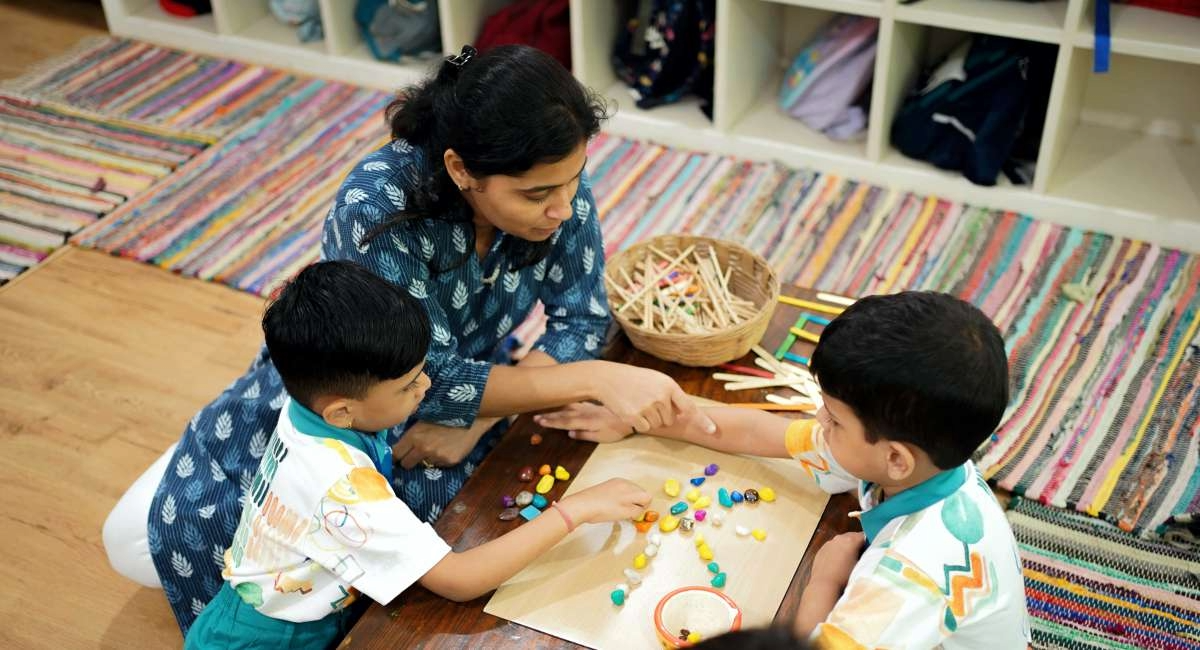
In the modern education system, teachers often face the pressure of completing syllabi and preparing students for examinations. While academic performance is important, education must also focus on developing critical thinking and problem-solving abilities. When students are encouraged to question, observe, and investigate, learning becomes deeper and more meaningful. A classroom then transforms into a space where curiosity is valued and discovery becomes part of the learning process.
Curiosity is the starting point of all scientific exploration. Students naturally wonder about everyday phenomena around them. Instead of immediately providing answers, teachers can encourage students to think, discuss, and explore possibilities. This shift in approach—from giving information to guiding inquiry—helps students develop analytical thinking skills.
For example, instead of simply explaining a scientific concept, teachers can begin a lesson with a real-life observation. A simple question such as “Why does a charged comb attract small bits of paper?” or “Why does a cricket ball swing in the air?” can spark student interest. When students start searching for explanations, they actively engage with the concept rather than passively memorizing it.
Creating a classroom environment that supports curiosity requires openness and encouragement. Students should feel comfortable asking questions without the fear of being judged or dismissed. When teachers acknowledge and appreciate students’ questions, they build confidence and motivate students to explore further.
An innovative classroom is built on three important elements: curiosity, confidence, and guidance. Curiosity encourages students to observe and question. Confidence allows them to share ideas freely. Guidance from the teacher helps them channel their curiosity into meaningful learning experiences.
Teachers play a crucial role as mentors who guide students through the process of inquiry. They help students refine their ideas, identify practical problems, and develop possible solutions. Even small classroom activities, experiments, or discussions can encourage students to think beyond textbooks.
One effective way to nurture curiosity is by guiding students toward small research projects or science investigations. These projects allow students to apply theoretical knowledge to real-world situations. Through this process, students learn how to ask questions, design experiments, collect data, and draw conclusions.
The first step in guiding a project is helping students choose a meaningful topic. Often, students select ideas that are either too complex or too broad. Teachers can help narrow down these ideas into practical and achievable investigations. This step is important because a well-defined question forms the foundation of a successful project.
The next stage involves planning the investigation. Students learn to frame hypotheses, design experiments, and identify the materials required for their study. This process helps them understand that science is not just about obtaining answers but about following a logical and systematic approach.
During experimentation, students may encounter unexpected results or challenges. These moments are valuable learning experiences. Teachers can guide students to analyze what went wrong and encourage them to try alternative approaches. Such experiences teach perseverance and resilience—qualities essential for innovation.
Presenting research findings is another important stage of the learning process. Whether it is a classroom presentation, school exhibition, or science competition, students gain confidence when they share their work with others. They learn to communicate ideas clearly, respond to questions, and appreciate feedback.
Teachers who guide such projects contribute not only to students’ academic growth but also to their personal development. Students become more independent, creative, and confident learners. They begin to understand that knowledge is not limited to textbooks but can be discovered through observation and experimentation.
Encouraging innovation in schools does come with challenges. Teachers often face limitations such as time constraints, lack of resources, and pressure to focus primarily on exam preparation. However, even within these constraints, inquiry-based learning can be integrated into regular classroom teaching.
Short investigative activities, simple experiments, and project-based assignments can gradually build a culture of curiosity. Teachers do not always need sophisticated equipment or laboratories to encourage exploration. Everyday materials and real-life observations can be powerful tools for learning.
Another important aspect is helping students view failure as a learning opportunity. Not every idea will work as expected, and not every experiment will produce successful results. When teachers help students analyze their mistakes and learn from them, they build resilience and develop a growth mindset.
Education in the twenty-first century must focus not only on knowledge but also on creativity, innovation, and problem-solving. Students who are encouraged to question and explore develop the confidence to think independently. These skills are essential for addressing the complex challenges of the future.
Teachers play a vital role in shaping this mindset. By encouraging curiosity, guiding research, and supporting exploration, teachers help students transform simple questions into meaningful discoveries. Every classroom has the potential to become a space where innovation begins.
The journey from curiosity to innovation does not always start with sophisticated laboratories or advanced technology. Often, it begins with a teacher who listens carefully to a student’s question and encourages them to explore the answer. When teachers believe in the power of curiosity, they empower students to become thinkers, problem-solvers, and future innovators.
Author Bio
Dr. Nisha Sharma is a passionate Physics educator with over 18 years of teaching experience and a strong advocate of inquiry-based and experiential learning. She has received several prestigious recognitions, including the Global Teacher Award, Teacher Brilliance Award, and the APJ Abdul Kalam Award, along with many other honors for excellence in education. She has successfully mentored students for national-level platforms such as the CBSE National Science Exhibition and the INSPIRE MANAK scheme.